Skip navigation

Main menu

  • What's On
  • Visit
  • Art
    • Discover Art
    • Artists
    • Artworks
    • Stories
    Stories
    Stories

    Watch, listen and read

  • Learn
    • Schools
    • Tate Kids
    • Research
    • Activities and workshops
    Tate Kids
    Tate Kids

    Games, quizzes and films for kids

  • Shop
Become a Member
  • View All
  • Tate Modern
  • Tate Britain
  • Tate St Ives
  • Tate Liverpool
  • Exhibitions And Displays
  • On Today
  • Events
  • Tate Britain
    Tate Britain Free admission
  • Tate Modern
    Tate Modern Free admission
  • Tate Liverpool + RIBA North
    Tate Liverpool + RIBA North Free admission
  • Tate St Ives
    Tate St Ives Ticket or membership card required
  • Families
  • Accessibility
  • Schools
  • Private tours
  • Discover Art
  • Artists
  • Artworks
  • Stories
  • Schools
  • Tate Kids
  • Research
  • Activities and workshops
Tate Logo

Try searching for...

  • J.M.W. Turner
  • Ophelia
  • Tracey Emin

DON'T MISS

Exhibition

Turner & Constable: Rivals & Originals

Tate Britain
Until 12 Apr 2026
Exhibition

Theatre Picasso

Tate Modern
Until 12 Apr 2026
Become a Member

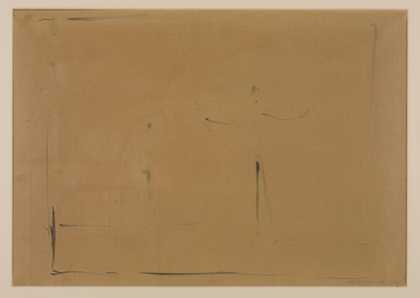
Alberto Giacometti

1901–1966

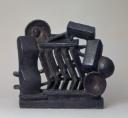
Composition (Man and Woman) 1927, cast ?1964
© The Estate of Alberto Giacometti (Fondation Giacometti, Paris and ADAGP, Paris), licensed in the UK by ACS and DACS, London 2026
License this image
In Tate Modern

Level 0: Tanks

In Tate Modern

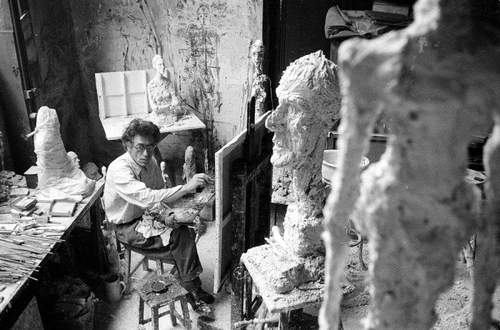
In the Studio

Free
In Tate Britain

Prints and Drawings Rooms

1 artworks by Alberto Giacometti
View by Appointment

Biography

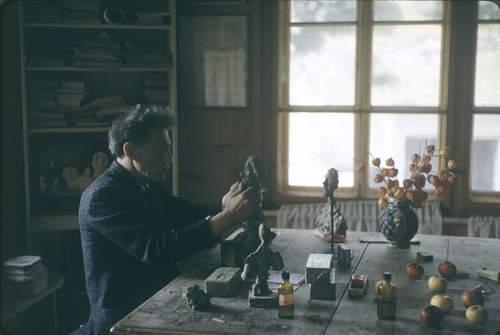
Alberto Giacometti (, US also , Italian: [alˈbɛrto dʒakoˈmetti]; 10 October 1901 – 11 January 1966) was a Swiss sculptor, painter, draftsman and printmaker, who was one of the most important sculptors of the 20th century. His work was particularly influenced by artistic styles such as Cubism and Surrealism. Philosophical questions about the human condition, as well as existential and phenomenological debates played a significant role in his work.

Beginning in 1922, he lived and worked mainly in Paris but regularly visited his hometown Borgonovo to see his family and work on his art. Around 1935, he gave up on his Surrealist influences to pursue a more deepened analysis of figurative compositions.

Giacometti wrote texts for periodicals and exhibition catalogues and recorded his thoughts and memories in notebooks and diaries. His critical nature led to self-doubt about his own work and his self-perceived inability to do justice to his own artistic vision. His insecurities nevertheless remained a powerful motivating artistic force throughout his entire life.

Between 1938 and 1944 Giacometti's sculptures had a maximum height of seven centimeters (2.75 inches). Their small size reflected the actual distance between the artist's position and his model. In this context he self-critically stated: "But wanting to create from memory what I had seen, to my terror the sculptures became smaller and smaller".

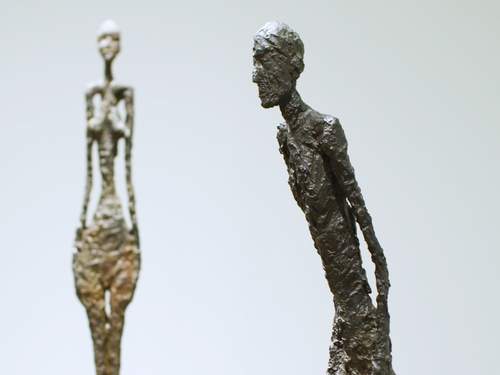
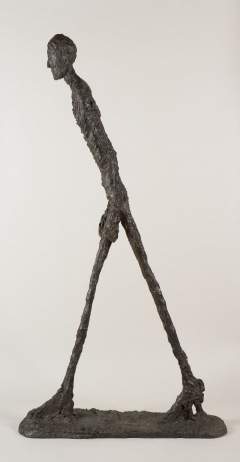
After World War II, Giacometti created his most famous sculptures: his extremely tall and slender figurines. These sculptures were subject to his individual viewing experience—between an imaginary yet real, a tangible yet inaccessible space.

In Giacometti's whole body of work, his painting constitutes only a small part. After 1957, however, his figurative paintings were equally as present as his sculptures. The almost monochrome paintings of his late work do not refer to any other artistic styles of modernity.

This biography is from Wikipedia under an Attribution-ShareAlike Creative Commons License. Spotted a problem? Let us know.

Read full Wikipedia entry
Surrealism

Artworks

Left Right

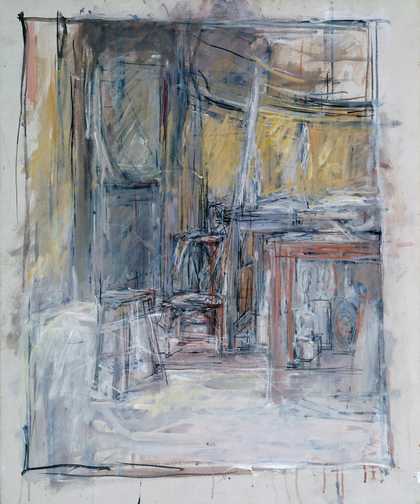
Interior

Alberto Giacometti
1949
On display at Tate Modern part of In the Studio

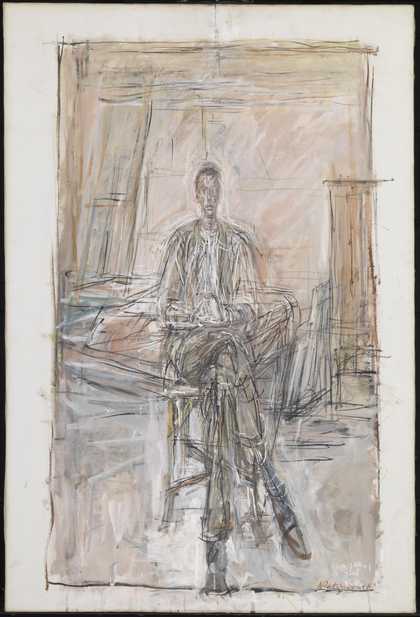
Seated Man

Alberto Giacometti
1949
On display at Tate Modern part of In the Studio

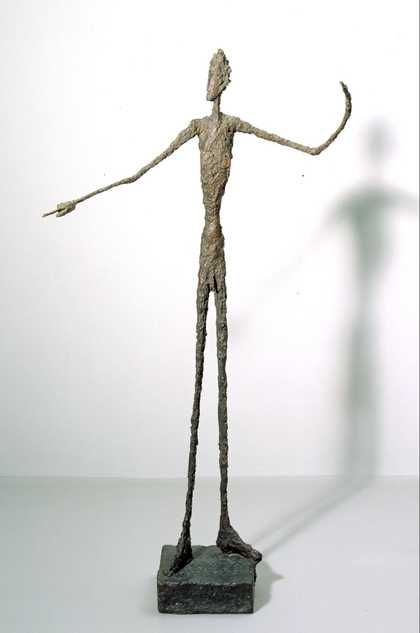
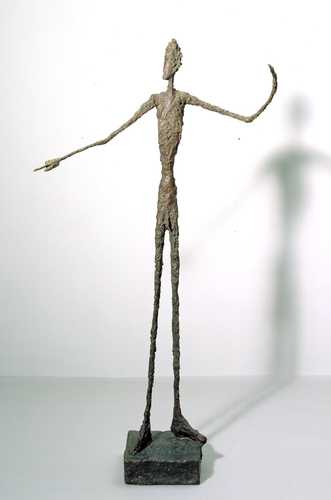
Man Pointing

Alberto Giacometti
1947
On display at Tate Modern part of Level 0: Tanks

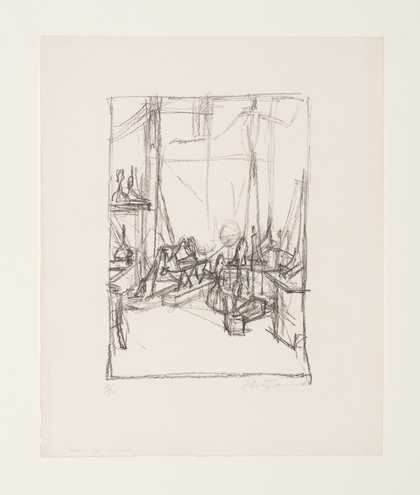
The Studio I

Alberto Giacometti
1954
View by appointment

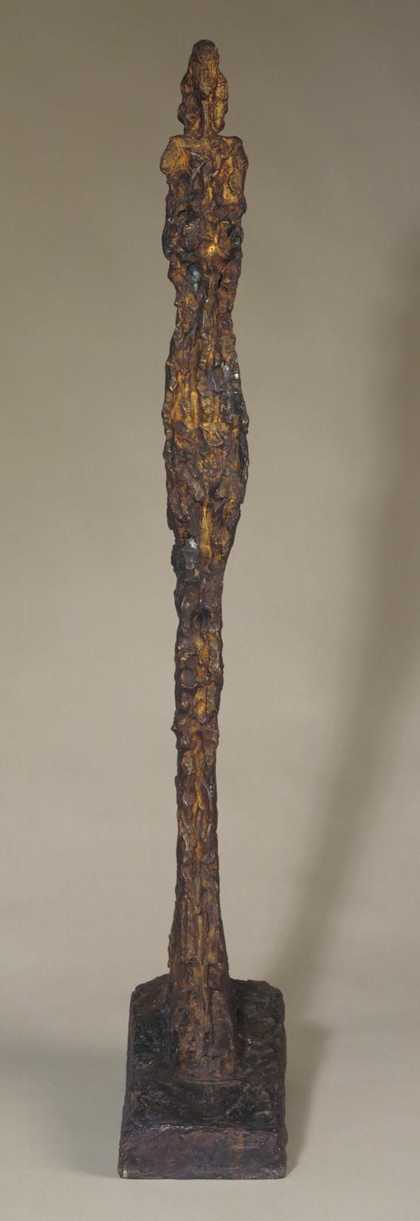
Woman of Venice IX

Alberto Giacometti
1956
On display at Tate Modern part of Level 0: Tanks

Two Figures

Alberto Giacometti
1947

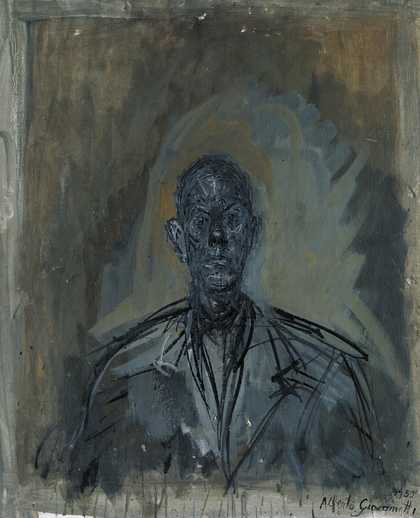
Diego

Alberto Giacometti
1959

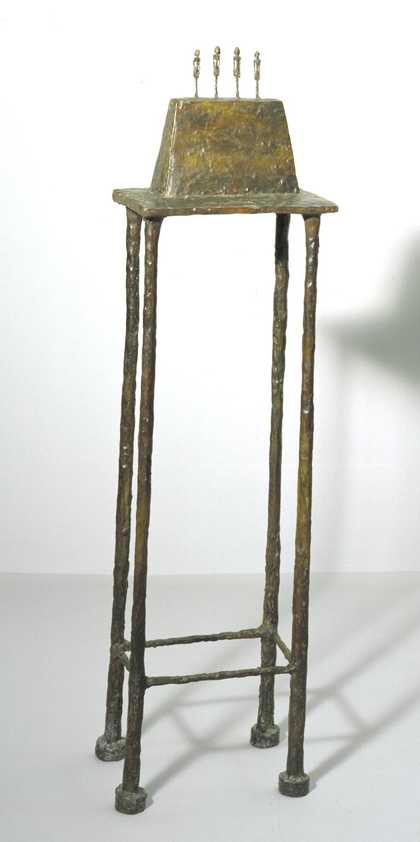
Four Figurines on a Stand

Alberto Giacometti
1950–1965, cast c.1965–6
On display at Tate Modern part of Level 0: Tanks
See all 21

Stories

Left Right
Interview

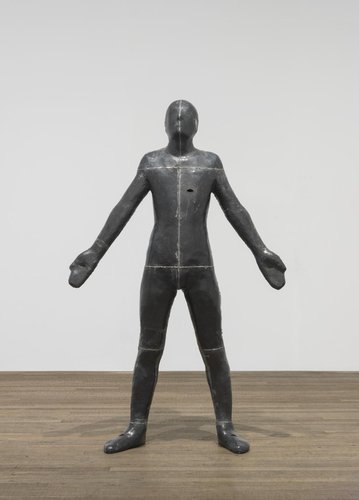
Antony Gormley on Alberto Giacometti

Interview

Introducing Alberto Giacometti

List

Eight things to know: Alberto Giacometti

Picture Essay

Inside Giacometti's studio

Essay

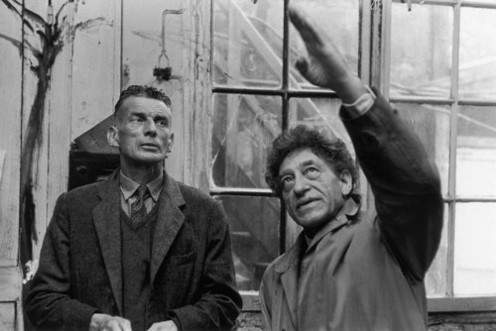
When Alberto Giacometti met Samuel Beckett

Exhibition Guide

Room Guide: Giacometti

Tate Etc

Alberto Giacometti: Breathing Life into Bronze

Colm Tóibín

Tate Etc

Inspired by Giacometti

Teresa Hubbard & Alexander Birchler and Jac Leirner

Tate Etc

Sitting for Giacometti

David Sainsbury

In the shop

Browse the shop
Artwork
Close

Join in

  • Twitter
  • Facebook
  • YouTube
  • Instagram
  • Pinterest
Sign up to emails

Sign up to emails

This site is protected by reCAPTCHA and the Google Privacy Policy and Terms of Service apply.

Tate’s privacy policy

About

  • About us
  • Our collection
  • Terms and copyright
  • Governance
  • Picture library
  • ARTIST ROOMS
  • Tate Kids

Support

  • Tate Collective
  • Members
  • Patrons
  • Donate
  • Corporate
  • My account
  • Press
  • Jobs
  • Accessibility
  • Privacy
  • Cookies
  • Contact
© The Board of Trustees of the Tate Gallery, 2026
All rights reserved